The Clock Without Tomorrow
Yavuz DEMİRKIRAN
- Category Children's Fairy Tales
- Format PDF
- Size 11.8 MB
- Added 29.10.2026
- Views 2
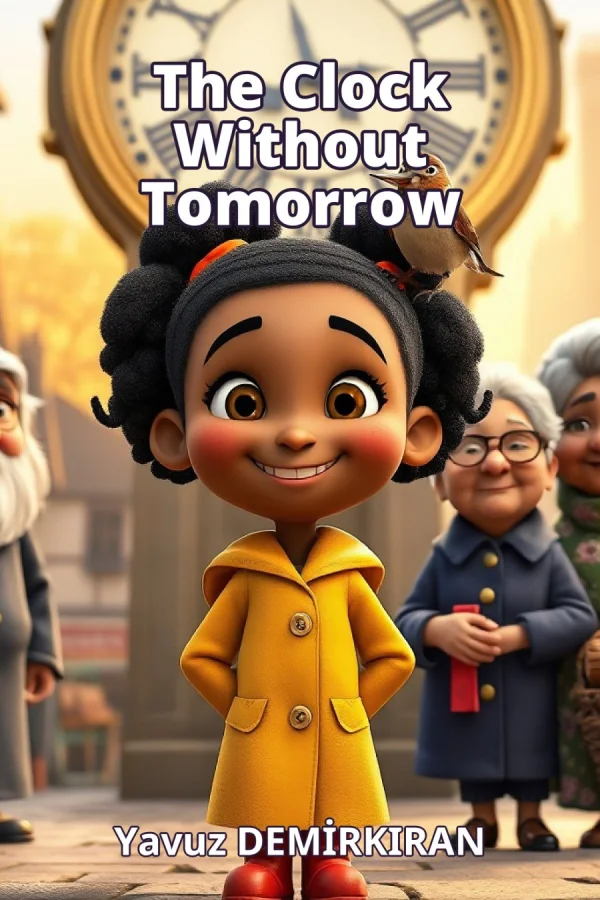
In the village of Evermorning, life runs like clockwork — literally. The great clock in the square has a golden future hand that predicts tomorrow's weather and events, and everyone plans their days around it. Amelia, a curious girl with two curly hair puffs, reads the clock each morning with her sparrow Pip at her side, telling neighbors when to hang laundry or bring an umbrella. Then one day the future hand vanishes, leaving only a tiny hole and a note saying the clock is tired of deciding everything for the villagers.
With old Master Tobias the clockmaker puzzled and Granny Hazel the baker worrying about the harvest festival, the village must learn to plan without predictions. Amelia gathers everyone in the square and suggests they share what they know and make choices together. The villagers check the clouds, prepare blankets and umbrellas, bake extra bread, and tie down tents, discovering that relying on one another feels good. When the picnic day arrives with an uncertain sky, they adapt cheerfully rather than panic.
The story shows young readers how teamwork, resourcefulness and flexibility can replace the comfort of certainty. It gently teaches that while no one can control everything, people can choose how to respond, and that surprises can become adventures. Children who enjoy warm village tales with a touch of magic will find a heroine in Amelia, whose courage and cheer help her community grow. The book suits young readers and read-aloud settings where its lessons about independence and cooperation can be discussed.
Read the Book
If the PDF does not appear, open it in a new tab.
A Chapter from the Book
The Clock Without Tomorrow Yavuz DEMİRKIRAN
In the village of Evermorning, the sun always rose on time. That was because of the great clock in the square. Its golden hands pointed to tomorrow's weather and events. Everyone planned their days by it. Amelia, a curious girl with warm brown skin and two curly hair puffs, loved to watch it. Her sparrow, Pip, chirped beside her. 1
The clock had a special future hand that showed what was coming. If it pointed to a sun, people hung out laundry. If it pointed to a cake, they baked for a party. Amelia's hazel eyes sparkled as she read it each morning. 'Tomorrow: rain,' she told her neighbor. 'Better bring your umbrella!' The village trusted the clock completely. 2
One morning, Amelia skipped to the square in her mustardyellow raincoat. But something was wrong. The future hand was gone! Only a tiny hole remained where it used to be. 'Oh no!' gasped Amelia. Pip flew around the clock, his red scarf flapping. The villagers gathered, worried. What would they do without tomorrow's weather? 3
Master Tobias, the old clockmaker, hurried over. His white beard trembled as he examined the clock. 'I've never seen this before,' he said, adjusting his round spectacles. 'The future hand has vanished.' The villagers murmured anxiously. Granny Hazel, the baker, clutched her bread basket. 'How will we plan the harvest festival?' she asked. 4
Amelia noticed a small note tucked inside the clock's door. She pulled it out and read aloud: 'I am tired of deciding everything for you. You can plan for yourselves.' The villagers looked at each other, confused. 'The clock is tired?' said Master Tobias. 'Maybe it wants us to learn to make our own choices.' Amelia nodded bravely. 5
That afternoon, the village felt strange. Without the future hand, no one knew if it would rain or shine. 'Should we have the picnic tomorrow?' asked a little boy. 'I don't know,' said his mother. Amelia thought hard. 'Let's plan it anyway. If it rains, we can move inside!' Pip chirped in agreement. The villagers smiled a little. 6
Amelia gathered everyone in the square. 'We can help each other,' she said, her orange ribbon fluttering. 'Let's share what we know and make plans together.' Granny Hazel raised her walking stick. 'I'll bake extra bread for the picnic,' she offered. Master Tobias added, 'I'll fix the leaky roof in the hall in case of rain.' 7
The villagers began to work as a team. Some checked the clouds, others prepared games. Amelia and Pip ran messages between houses. 'The wind is rising,' called a farmer. 'Let's tie down the tents!' Everyone pitched in. It felt good to rely on each other instead of a magical clock. Laughter filled the air. 8
On the day of the picnic, the sky looked uncertain. But the villagers were ready. They had blankets and umbrellas, and Granny Hazel's fresh bread. 'Even if it rains, we'll have fun,' said Amelia, her gap-toothed smile wide. Pip wore a tiny rain hat. When a few drops fell, no one panicked. They simply moved under the big oak tree. 9
The picnic was a joyful success. Children played games, adults told stories, and Master Tobias played his pocket watch like a tiny drum. 'This is better than any prediction!' he chuckled. Amelia looked at the clock, still missing its future hand. But the village no longer worried. They had learned to plan and adapt together. Surprises became adventures. 10
One evening, Amelia visited the clock alone. 'Thank you,' she whispered. 'We don't need you to decide everything.' She thought she saw the clock's remaining hands twitch, as if nodding. From then on, the villagers embraced each day as it came. They planned, but also welcomed surprises. The clock still showed the time, but the future was theirs to shape. 11
Master Tobias admitted he had relied on the clock too. 'I forgot to trust my own skills,' he said, repairing a neighbor's roof. 'Now I feel useful again.' Granny Hazel organized weekly shared meals. 'Planning together is better than waiting for predictions,' she said, passing around warm bread. Amelia beamed, her hazel eyes bright. 12
Pip the sparrow loved the new spirit. He chirped happily as he fetched helpers for small tasks. 'Pip says the sun is coming out!' Amelia laughed. The villagers cheered. They had learned that they couldn't control everything, but they could choose how to respond. With courage and cheer, they faced each day together. 13
The village of Evermorning thrived. The clock without tomorrow became a symbol of their newfound independence. Amelia often sat beneath it, her red boots swinging. 'We make our own tomorrows,' she told Pip. And the villagers agreed. They still checked the clock for the time, but they no longer depended on it for their happiness. 14
Master Tobias built a small garden around the clock. 'To remind us that we grow our own futures,' he explained. Granny Hazel planted flowers, and children watered them. Amelia added a sign: 'Today is a gift. Tomorrow is our adventure.' The clock ticked steadily, but the future was no longer a mystery to fear. 15
And so, the village learned to embrace surprises. When unexpected rain fell, they danced in it. When a traveler arrived, they welcomed him with bread. Amelia and Pip knew that while they couldn't control everything, they could always choose courage and cheer. The clock without tomorrow had given them the greatest gift: trust in themselves and each other.
This section is a preview taken from the book (about 924 words). To continue, read the book or download the PDF.
Book Details
- Book
- The Clock Without Tomorrow
- Author
- Yavuz DEMİRKIRAN
- Category
- Children's Fairy Tales
- Language
- English
- Format
- PDF · 11.8 MB
- Pages
- 18
- Words
- about 925
- Published
- Online Masal · 29.10.2026
- Access
- Free to read and download; for personal use only, all rights belong to the author.
Frequently Asked Questions
Is the PDF of The Clock Without Tomorrow free?
Yes. The Clock Without Tomorrow can be read and downloaded for free on this site; no sign-up or payment is required.
How many pages is The Clock Without Tomorrow?
The Clock Without Tomorrow has 18 pages and about 925 words.
Which devices can I read The Clock Without Tomorrow on?
It is a PDF; you can read it in your browser on a phone, tablet or computer, or download it and open it offline.
Who is the author of The Clock Without Tomorrow?
The Clock Without Tomorrow was written by Yavuz DEMİRKIRAN; it is listed in the Children's Fairy Tales category.