The Clockmaker's Festival
Yavuz DEMİRKIRAN
- Category Children's Fairy Tales
- Format PDF
- Size 13.9 MB
- Added 29.10.2026
- Views 2
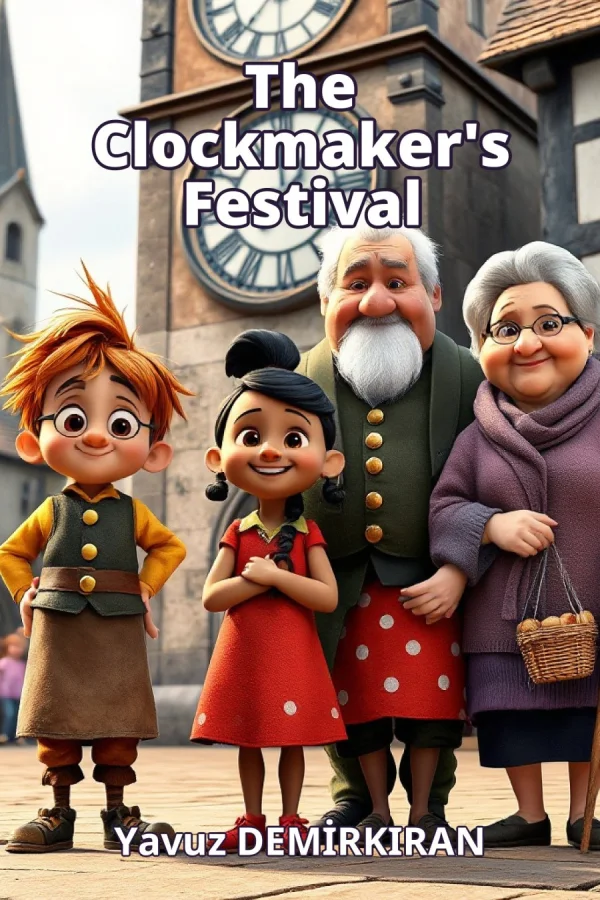
In the town of Tickford, clocks of every shape and temperament hang on walls and sit in shop windows, each with its own funny personality. Henry, a small, wiry apprentice with messy copper-red hair and a brass magnifying loupe around his neck, spends his mornings winding clocks and polishing gears in Master Osric's shop, learning to listen closely because every clock has a voice. His best friend Pip, a round-faced girl with puffy braids and a tin whistle, loves noise and dreams of a festival filled with music, clocks and dancing.
When the oldest clock in the town square gives a sad clunk and stops just a week before the yearly Clockmaker's Festival, the whole town's rhythm is at risk. Master Osric finds the main spring wound but the clock silent, and Henry steps forward to help. With his loupe and careful listening, he discovers that the clock needs a special musical pattern to work again. Together with Pip and Widow Marlow, the kind baker in a lavender shawl, Henry searches old books and dusty shelves until a cracked leather journal reveals the lost tune. But setting the clock takes more than one sound: the villagers must clap and whistle the pattern together while Henry oils gears and checks springs.
The story follows Henry's patient attempts, his doubts and the small hidden lever that finally sets the old clock humming again. It is a warm tale about listening closely, asking others for help and discovering that history is kept alive by many hands. Young readers who enjoy gentle fairy tales about friendship, music and community will find here a simple, satisfying lesson: every clock has a voice, but together they make a song.
Read the Book
If the PDF does not appear, open it in a new tab.
A Chapter from the Book
The Clockmaker's Festival Yavuz DEMİRKIRAN
In the town of Tickford, clocks were everywhere. They hung on walls, stood in windows, and sat on shelves. Each clock had its own funny personality. Some ran fast, some ran slow, and one old clock always chimed at lunchtime, even when it was midnight. Everyone loved their ticking friends. 1
Henry was the clockmaker's apprentice. He was small and wiry, with messy copper-red hair and a brass magnifying loupe around his neck. Every morning he wound clocks and polished gears in Master Osric's shop. Master Osric, tall and stooped with a white moustache, taught him to listen closely. 'Every clock has a voice,' he said. Henry listened well. 2
Henry's best friend was Pip, a round-faced girl with two puffy braids and a tin whistle on a string. Pip loved noise. She played her whistle while Henry worked, and the clocks seemed to tick along with her tunes. 'One day,' Pip said, 'we'll have a festival with music and clocks and everybody dancing!' Henry grinned. He hoped she was right. 3
The yearly Clockmaker's Festival was only a week away. Everyone in Tickford prepared. Widow Marlow baked bread rolls and hung ribbons. Pip practiced her whistle. Henry polished every gear. But on Monday morning, the oldest clock in the town square gave a sad little clunk and stopped. Its hands froze like a statue. 4
Master Osric climbed the ladder to the ancient clock. He opened its brass door and peered inside with his round spectacles. 'Oh dear,' he said. 'The main spring is wound, but the clock won't tick. Without it, the other clocks lose their rhythm. No festival.' His wrinkled hands shook. Henry stepped forward. 'I'll help, Master Osric.' 5
Henry put the brass loupe to his eye and looked deep inside the clock. Gears sat still. Springs lay quiet. He listened with his whole body. Then he heard a tiny, faint hum, like a bee far away. 'There's a pattern,' he whispered. 'The clock needs a special musical pattern to work again.' He hurried to tell Master Osric. 6
Master Osric stroked his long white moustache. 'Long ago, the clocks were synchronized by a song,' he said. 'But the song was lost.' Henry and Pip searched old books and dusty shelves. At last, in a cracked leather journal, Henry found a page of notes. 'Look, Pip! It's the musical pattern!' Pip read the notes and played them on her whistle. 7
The tune was simple and bouncy. But when Henry tried to set the clock, it stopped again. 'The pattern needs more than one sound,' he said. 'The clocks must work together.' Pip nodded. 'Then we need everybody! Let's ask Widow Marlow.' The baker was plump and kind, with a lavender shawl and warm brown eyes. She clapped her hands. 'Leave it to me.' 8
Widow Marlow gathered the villagers in the square. She passed out bread rolls and told them the plan. 'We'll clap the rhythm while Henry fixes the clock!' she said. Pip played the tune on her whistle. Henry showed them the pattern: clap, clap, tick, tock. At first it sounded messy. But they practiced and practiced until it was perfect. 9
Henry climbed the ladder with his tools. He oiled the gears and checked the springs. The villagers clapped and Pip whistled the musical pattern. Henry listened. He tightened a small screw. Nothing happened. He tried again. Still nothing. His hands felt sweaty. 'I don't know,' he whispered. But the villagers kept clapping, steady and strong. 10
Then Henry noticed a tiny lever hidden behind a gear. It was stuck. Gently, he nudged it with his finger. The lever clicked into place! Suddenly the old clock hummed. Its gears began to turn, slowly at first, then faster. The hands moved. The pendulum swung. Henry shouted, 'It's working! Keep the rhythm!' The villagers clapped louder and louder. 11
The clock chimed once, twice, three times. Then all the clocks in Tickford joined in. The fast clocks and slow clocks, the lunchtime clock and the pocket watches, all ticked and chimed together. The festival was saved! Master Osric wiped his eyes with an ink-stained finger. 'You did it, Henry. Teamwork brought the clock back.' 12
That evening, the square was full of lanterns and music. Pip played her whistle, and Widow Marlow handed out warm bread. Henry stood beside Master Osric, his brass loupe gleaming. 'You see,' said the old clockmaker, 'every clock has a voice, but together they make a song.' Henry smiled. He had learned that history is kept alive by many hands. 13
The festival lasted all night. People danced and laughed. The clocks chimed in harmony, and the old clock kept perfect time. Henry felt proud. He had discovered the musical pattern, but without Pip's whistle and Widow Marlow's bread and the villagers' clapping, it would have been just a tune. Cooperation had saved their shared history. 14
From that day on, the people of Tickford listened to their clocks differently. They heard the fast ticks and the slow ticks and the lunchtime chimes as one big family. Henry became the youngest clockmaker in town. He kept the brass loupe around his neck and always remembered that small hands and many friends can fix big problems. 15
And every year, when the Clockmaker's Festival came around, the villagers clapped the special rhythm and Pip played her whistle. The oldest clock led the song, and all the clocks chimed happily. Cooperation and music filled the square, and the town's shared history ticked on, warm and bright, for everyone to enjoy.
This section is a preview taken from the book (about 934 words). To continue, read the book or download the PDF.
Book Details
- Book
- The Clockmaker's Festival
- Author
- Yavuz DEMİRKIRAN
- Category
- Children's Fairy Tales
- Language
- English
- Format
- PDF · 13.9 MB
- Pages
- 18
- Words
- about 935
- Published
- Online Masal · 29.10.2026
- Access
- Free to read and download; for personal use only, all rights belong to the author.
Frequently Asked Questions
Is the PDF of The Clockmaker's Festival free?
Yes. The Clockmaker's Festival can be read and downloaded for free on this site; no sign-up or payment is required.
How many pages is The Clockmaker's Festival?
The Clockmaker's Festival has 18 pages and about 935 words.
Which devices can I read The Clockmaker's Festival on?
It is a PDF; you can read it in your browser on a phone, tablet or computer, or download it and open it offline.
Who is the author of The Clockmaker's Festival?
The Clockmaker's Festival was written by Yavuz DEMİRKIRAN; it is listed in the Children's Fairy Tales category.